 Ledger
The Envelope System, Forty Years On
The envelope system is older than you think, and it didn't fade because it stopped working. Here's the actual mechanism that made it effective, and why it's back.
 By Camille Ferro, CFP® · · 7 min read
Where the envelope system actually came from
The envelope system predates the phrase “budgeting app” by roughly a century. Household finance manuals from the early 1900s already describe dividing a pay envelope into labeled sub-envelopes for rent, food, and savings before a single dollar got spent, and the practice became especially associated with Great Depression-era households, where a cash shortfall wasn’t a hypothetical risk to budget around — it was the default condition most families were managing. The system survived for a straightforward reason: it doesn’t require literacy in accounting, a bank account, or any tool beyond paper envelopes and the cash itself. You can run it with a sixth-grade education and no outside resources, which is precisely why it spread through households that had neither spare financial education nor spare money.
The one mechanic that actually made it work
Strip away the nostalgia and the envelope system reduces to one enforcement mechanism: when an envelope is empty, spending in that category stops, immediately and without negotiation, until the next pay period refills it. There’s no credit line to fall back on, no “I’ll just move a little from savings this one time” without physically walking to the other envelope and watching it shrink. The friction is the entire point. A credit card removes exactly this friction — which is convenient in every situation except the one where the friction was protecting you from a decision you’d regret.
This is also the detail that modern “digital envelope” budgeting apps are explicitly trying to recreate: a visible, finite number per category that drops in real time as you spend, rather than one combined checking balance that doesn’t tell you whether the $200 left is grocery money or rent money until it's already gone.
Why it faded, and it wasn’t because it stopped working
The envelope system didn’t decline because people found something better — it declined largely because the infrastructure underneath it changed. Direct deposit became the norm through the 1970s and 80s, which meant paychecks increasingly never existed as physical cash to divide into envelopes in the first place. Debit cards, and later contactless payment, made paying with physical cash slower and less convenient than the alternative for the first time in history, reversing centuries of the opposite being true. By the time online banking made checking a balance effortless, an entire generation had grown up never handling a full paycheck in cash, and the system quietly became something your grandmother did rather than something anyone currently did.
A detail most retellings skip
The envelope system was never primarily about discipline or willpower in the way it's sometimes framed today. It was a practical response to a specific problem: a cash-based economy with no overdraft protection, where spending past zero in one category wasn't an abstraction you'd notice on a statement later — it meant the money for rent or food physically wasn't there anymore. The system solved a liquidity problem first, and only became a psychological or disciplinary tool once bank accounts made the liquidity problem largely disappear.
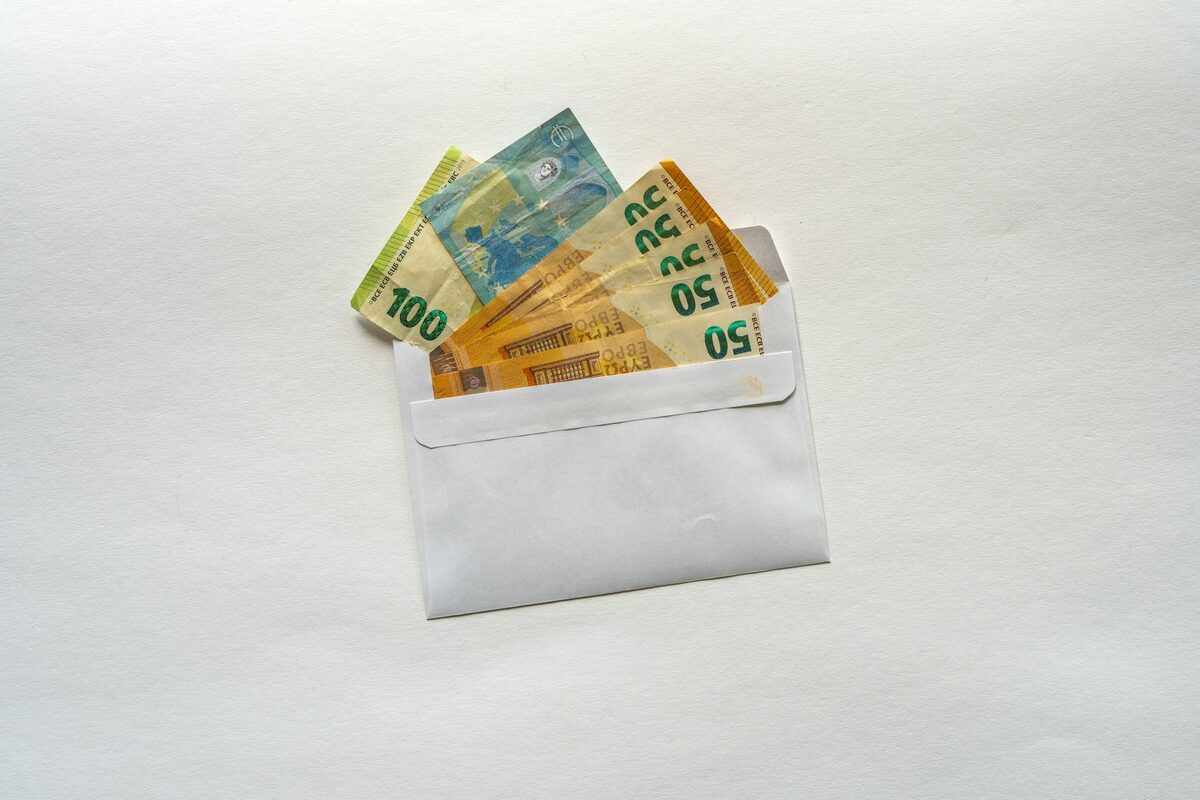
The modern revival, forty years on
The envelope system never fully disappeared; it resurfaced in the 1990s and 2000s through cash-based budgeting programs that explicitly revived the physical envelope method as a teaching tool for households trying to break a debt cycle, and more recently through a wave of banking apps that offer sub-account “buckets” or digital envelopes layered on top of a normal checking account. The digital versions solve one real limitation of the original — physical cash envelopes don’t work well for rent, utility bills, or anything paid electronically — while trying to preserve the one mechanism that made the original effective: a visible, separate, finite balance per category that you can watch shrink.
What the digital versions still struggle to fully replicate is the physical friction. Moving money between two digital buckets inside the same app takes two taps and no real psychological resistance. Physically moving a twenty-dollar bill from the grocery envelope to the entertainment envelope, in a house where everyone can see the envelopes on the kitchen counter, carries a weight that a phone screen doesn't.
Does it still make sense for anyone today?
It’s a reasonable fit for specific situations rather than a universal recommendation: households recovering from overspending who want hard, physical limits rather than a number on a screen they can rationalize past; people who find that tracking spending digitally doesn’t create the same felt sense of a shrinking resource that cash does; or anyone managing a household where more than one person spends from a shared pool and wants a visible, shared understanding of what’s left, without needing to check an app or compare notes. It’s a poor fit for anyone who primarily pays rent, utilities, and subscriptions electronically, where the physical-cash version simply doesn’t cover most of the budget to begin with — which is most households today, and the core reason the system shrank from a household default to a niche technique rather than vanishing outright.
Common questions about the envelope system
Is the envelope system the same thing as zero-based budgeting?
They're related but not identical. Zero-based budgeting is the broader principle that every dollar of income gets assigned a purpose before the month starts, so income minus all allocations equals zero. The envelope system is one specific, physical implementation of that principle, using cash and labeled envelopes rather than a spreadsheet or app.
Why did the envelope system become associated specifically with the Great Depression?
Because it was a practical, zero-infrastructure way for cash-strapped households to make sure fixed obligations like rent got paid before any money was available for anything else, at a time when many families genuinely could not count on steady income and had no form of overdraft protection or revolving credit to fall back on.
Do digital envelope or "bucket" banking apps actually work as well as physical cash?
They recreate the visible, separate-balance structure well, but several studies on cash versus card spending suggest physical cash creates a stronger felt sense of loss when spending it, which may be part of why some people find physical envelopes more effective at curbing overspending than an equivalent digital balance, even when the numbers shown are identical.